
The Art of Cooking Easter Lamb, From Tradition to Table
Updated: Mar 31
Steeped in history and flavor, this guide explores the origins of the dish alongside expert tips and a recipe from Richard Corrigan.
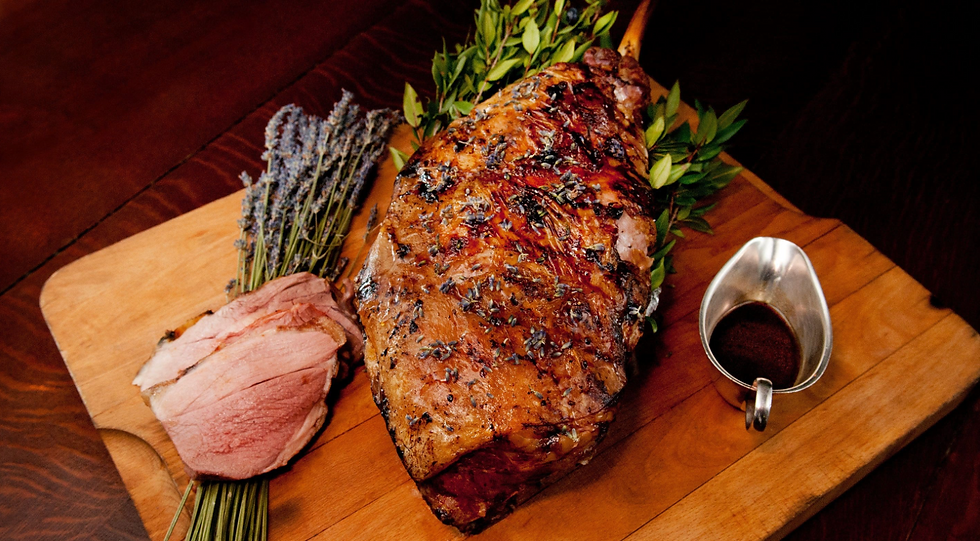
Why Is Lamb Eaten At Easter?
Lamb is customarily consumed on Easter Sunday because of its religious importance. In Christianity, the lamb symbolises Jesus' self-sacrifice and crucifixion; in the Bible, John the Baptist designates Jesus as the 'Lamb of God.' Lambs, however somewhat ironic, are acknowledged as symbols of spring and new beginnings, aligning with the Easter notion of resurrection.
Richard Corrigan’s Lamb with Rosemary and Lavender Recipe
Ingredients:
2kg/4½lb leg of lamb, on the bone
1 small bunch of English lavender
5 sprigs of rosemary
2 cloves garlic
1 small jar of honey
30g salt
Method:
Preheat the oven to 200C/400F/Gas 6.
Remove the lavender buds from the stalks and add to the honey
Pull the rosemary leaves from the stalks and place in a blender. Add the salt and blitz.
Rub the lamb all over with the salt and place in a roasting tray.
Cover with foil and place in the oven for 20 minutes. After which remove the foil and leave to roast for a further 40 minutes (for medium).
Pour over the lavender and honey, return to the oven for a further 10 minutes.
Remove the lamb and leave it to rest for 10-15 minutes, with some foil on top to keep it warm.
Serve with the pan juices and spring vegetables.


Comments